

Dialectic Ep. 40: Charles Broskoski - Everything is Personal
18 Lessons from Charles on Tuning Your Radar, Making Generous Tools, and Building a Personal Business that Lasts
Creativity is decision-making. Amidst infinite choice, you have to decide what you’re going to do and what problems you’re going to solve. Charles traces this from Duchamp to founders he admires. And the decision rubric is always personal.
You are your love, not what you love. The teenager who defines themself by being into hardcore has mapped their identity to the object, rather than their relationship to it. Your taste isn’t the songs you saved. It’s the recognition that made you press save. Charles calls this your radar.
Self-knowledge is prerequisite. Charles keeps coming back to the same conviction: the hardest thing about being creative is understanding yourself. Every other skill—in art, in business, in building things—stacks on top of that foundation.
Let yourself wander. Charles has always been the type to flip ahead in the textbook just to see what was over there: part rebellion, part curiosity. Are.na was built on that impulse. Karly describes it as research as leisure activity. The key is that it’s self-directed: nobody assigns the chapter that changes your life.
Anything can be a nodal point. A piece of information that changes you, simultaneously discovering and creating yourself. The shadiest JPEG, recontextualized, might become meaningful to you. As Anni Albers told her students: “You can go anywhere from anywhere.”
Clear the stage or miss the signal. When your job lives on a screen, anything you might be interested in has to fight every other thing in the world. Giant corporations have business models designed to hijack and dull your radar. But the answer isn’t obsessing over finding the perfect object. It’s being in a state where you can be surprised by one.
Taste is self-knowledge, not a debate. When people call taste a skill, they make it competitive. Charles finds this absurd: “I like this hot dog, you don’t like this hot dog, therefore I’m better than you.” Real taste is the composite of a person’s idiosyncratic perspective developed over years. It’s too personal to be ranked.
Every trick has a connotation. Charles is 43 and still skateboards. Skating is a referential practice: you consume more reference than you spend doing the activity. It’s also a model for creative work. Absorb, perform based on mood, and eventually your influences dissolve into something that looks like you.
In defense of posers. If you find yourself wanting so hard to associate with an idea, that means something. Your radar is firing. Charles is a self-described poser apologist: faking it until you make it is just pushing yourself outward. The vulnerability required to maintain that position deserves respect, not ridicule. We all start somewhere.
Patterns evolve as you collect. Charles uses Are.na channels to frame what he finds. It starts with 3 to 5 related artifacts. As he adds, the whole collection means something slightly different. He uses these evolving containers as filters for his thinking, and over time, may even crystallize into essays. Collecting is pleasurable; writing is where the decisions get made.
Anything can be interesting if you’re interested. Charles’s professor Cory Arcangel would take links students brought to class and parse out why they might matter. Later, Cory did the same at art shows, talking through how he was looking at things, no matter how arbitrary. The generosity is in opening up the aperture, not in having the answer.
Here for love, not fame. Charles borrows from The Bachelor to describe the corrupting force online when someone is here for the wrong reasons: their interests accumulate with an awareness of how they’ll reflect back onto them. The antidote is attention without expectation. Showing something with joy, not to look like a person with good taste.
The most generous art is a tool. Early in his career, Charles thought generosity as an artist meant being vulnerable and diaristic, sharing images of himself and his family. Eventually, he flipped: the most generous thing you can do is remove yourself and make things for other people to use. Are.na is software built to be reinterpreted, not admired.
Great design fades into the background. Are.na commissioned a custom typeface called Areal, a near-invisible refinement of Arial designed so you can’t spot the difference. The hope is that it feels like refreshing a browser page: the same, but it isn’t. Content should come through more than the interface. The ambition is to look good without looking like too much of anything.
Give people room to think. “It’s so easy to treat technology as though it can prescribe a solution to a particular problem. But what humans really need is much more simple: time and space to think and process.” Are.na‘s design philosophy centers on giving you space rather than sorting things for you. The best tools don’t tell you what to pay attention to.
The internet needs more artists building software. Are.na‘s team comes from creative backgrounds, and Charles believes creative decision-making is harder to teach than the mechanics of running a company. The internet would be more interesting if more people like that were building things.
The slow blade penetrates the shield. Are.na is approaching its 15th anniversary, thanks to patient growth. Its aspirational peer isn’t Facebook. It’s Nishiyama Onsen Keiunkan, a Japanese hot spring hotel founded in 705 AD. Charles nearly ran out of money, freelanced on the side, and kept going — because “getting to work on something cool with your friends is the most luxurious thing you can do.”
“It ought to begin by being personal.” The Delaware C Corp name for Are.na is “When It Changed,” a nod to when its creative founders took control. The platform’s subscription model, its no-algorithm stance, its principled minimalism: it all flows from one premise Charles can’t escape. “I think it’s the coolest thing on the Internet. I don’t know what else I would do.”
Description
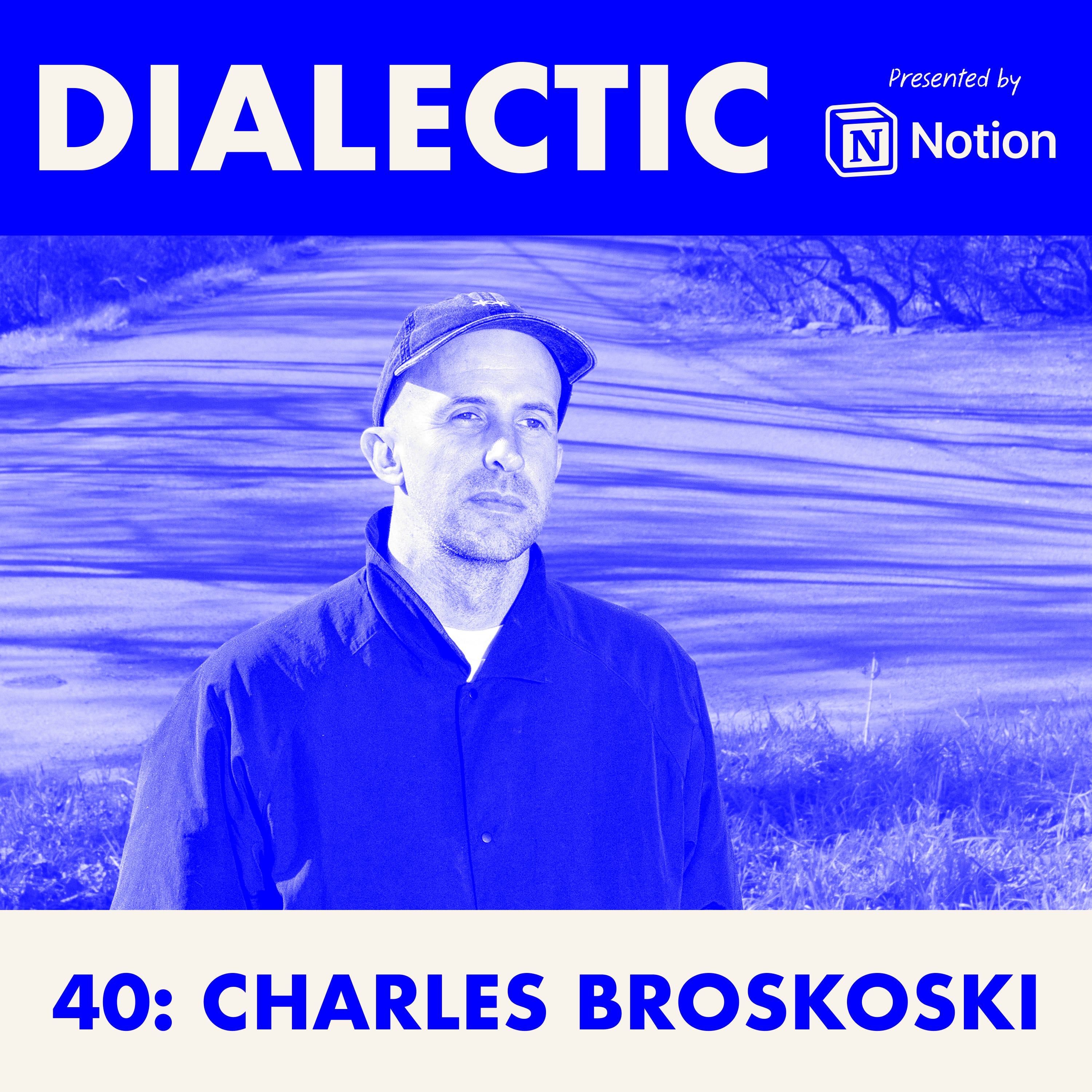
Charles Broskoski (Website, Are.na, X), aka Cab, is an artist turned entrepreneur and co-founder & CEO of Are.na, a platform for collecting, connecting, and self-directed learning. I created an are.na channel for all of the references I used in preparation for this episode.
Charles began as an artist before becoming a software engineer, and started Are.na with many collaborators out of a desire to replace the now defunct del.icio.us after it was acquired by Yahoo. He and a range of collaborators have been working on Are.na for nearly 15 years, and he is now focused on it full-time, thanks to the platform’s 18,000 paying subscribers.
While I’m not a longtime Are.na user, I discovered Charles by way of his talk / essay, “Here for the Wrong Reasons” and was enthused by his philosophy of attention and how the things we encounter shape us.
Our conversation centers on patterns of noticing and what it means to know yourself through what you pay attention to, or as Charles calls it, your radar. We discuss creativity as decision-making, self-directed learning and research, and Are.na‘s channels as frames for what we encounter. We also talk about personal versus performative taste, opinionated design that still gives you space, building something that lasts, and why Charles believes creative people should start deeply personal businesses.
I hope you are inspired to be generous and scrutinizing with your attention, to create things that are personal and durable, and to remember that knowing yourself is a worthy journey of a lifetime.
Dialectic is presented by Notion. Notion is an AI-powered connected workspace where teams build their best work. Notion is also where I compile research for episodes and where you can find all links and transcripts. You can learn more at notion.com/dialectic.
Special thanks to Earshot in NYC for hosting us for this conversation.
Timestamps
(0:00) - Opening Highlights
(1:21) - Intro: Charles Broskoski
(4:00) - Thanks to Notion
(5:26) - Start: Creativity as Self-Knowledge and Problem-Solving
(13:37) - Self-directed Learning and Casual Research
(21:33) - Skateboarding, Being a Beginner, In Defense of Posers
(33:26) - Contextual Patterns and Channels
(45:54) - Nodal Points, Your Radar, and Careful Attention
(1:04:57) - Subjectivity, Self-Knowledge, and Taste
(1:15:09) - Performance: Here for Fame and Not Love
(1:22:53) - Aspirational Attention
(1:29:02) - Designing Generous Tools
(1:42:44) - Space in a Product and Fading into the Background
(1:50:01) - Why Creatives Should Be Entrepreneurial & Building an Independent Business Online
(1:54:11) - Patience, Durability, and Antifragility
(1:59:48) - Personal Businesses
(2:10:27) - Grab Bag: Authenticity, Bohm Dialogue, Skateboarding, and Keeping Things Personal
(2:28:28) - Thanks Again to Notion
All links available at dialectic.fm/cab.


