

Celine Nguyen says intellectual discovery is our birthright:
“reading and writing are the most dignified and worthy activities that anyone can do—and, in fact, are activities that everyone should do.”
I talked to Celine about changing your life by writing online, expanding the market for what you love, and starting somewhere, even if it requires pure impulse.
Celine writes personal canon, a newsletter focused on taking your intellectual development seriously as someone outside of academia or school. This includes literary criticism and many more interdisciplinary thoughts across art, culture, design, and technology. She doubles as a product designer in her professional life.
We discuss:
leisurely research and creating a curriculum for your growth long after you graduate: “who do I want to be at the end of the season?”
why literary classics can be thrilling rather than dutiful, how you can expand the market for what you love, and why *you* should read Proust
using parasociality to psyop people into doing things that are good for them
how studying historical contexts makes us smarter about the present, and how to root yourself in epistemic humility about the now
why note taking systems must be a means to an end, and how her best “systems” are inefficient handwritten journals and actual published work
becoming the “Venkatesh Rao for tumblr girls”
how learning makes you live “longer”
that many will wait a lifetime for someone to give them permission to do what they’ve always hoped to do
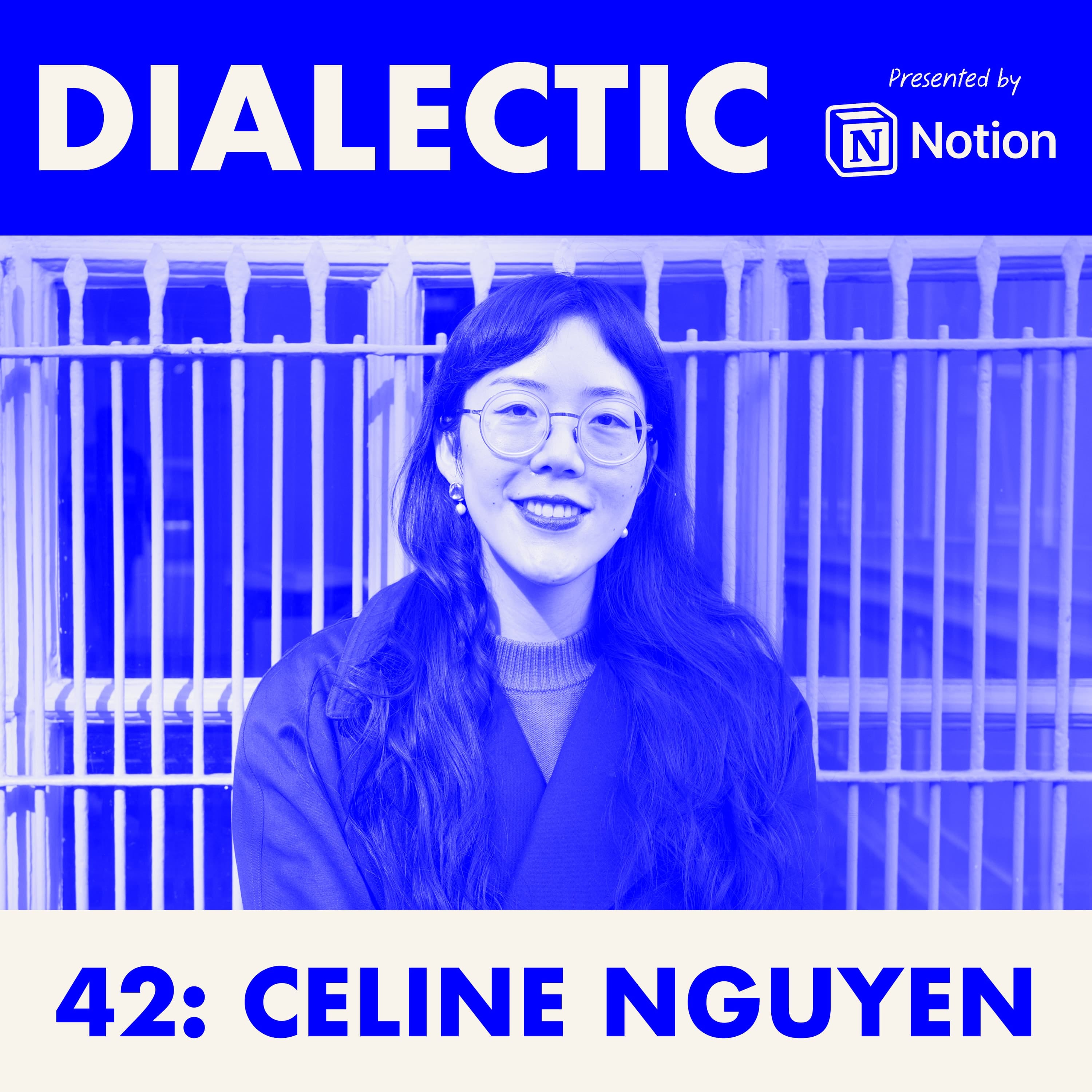
Dialectic Ep. 42: Celine Nguyen -Nurturing Your Mind in Public
17 Lessons from Celine on Taking Your Intellectual Interests Seriously
Intellectual life is your birthright. Reading, writing, and critical thinking are not luxuries for academics or critics. They are part of being a person. Everyone has the right to produce a worldview, not just inherit one.
Great art elicits a response. The best art prompts you to participate. You read something brilliant, and suddenly you want to: answer it, extend it, remix it, argue with it—and make something of your own.
Creation starts as imitation. Fanfiction, tweeting about an essay, deep copying: these are not shameful. They are often the first reps before you trust yourself enough to make an original work.
Don’t wait for a syllabus to rescue you. School ends, but the opportunity to learn doesn’t. At some point, if you want an intellectual life, you have to become your own institution, your own department, your own demanding little faculty of one.
Cheap constraints can grow valuable minds. A long commute and a tiny phone plan pushed Celine toward Kindle books instead of Instagram. A lot of intellectual life begins not with ideal conditions, but with whatever gives you the space to think.
Curiosity dies when it gets too well-behaved. What stops most people from self-directed learning isn’t laziness. It’s neurotic rigidity: the fear of starting with the wrong text, having the wrong interpretation, or learning things in the wrong order.
Who do you want to be by summer? That’s Celine’s real question when she plans her reading. The point is not to accumulate information. It is to shape yourself. What you study, what you return to, what you cannot stop circling: these are the inputs that make a mind.
Let history be a lens, not a museum. A frame from sociology, theology, or literary criticism can explain the strange behavior of a founder, the “sudden” rise of a platform, or a whole cultural fever dream.
Notes are scaffolding, not a cathedral. Celine went from obsessive note-system maintenance to barely touching it. The shift was simple: instead of optimizing the tool, she could open the draft and work on the actual thing. “All my ideas end up contained within the work.”
Slow work is a sharpening stone. Anne Carson translated Greek words by hand using a physical lexicon. Celine journals longhand and maintains a table of contents in ink. Your mind is the instrument producing the work; anything that sharpens it is rarely wasted.
The essay is the shot glass. Before Celine published anything, she had all the books, the conversations, the ambitions. Writing was the thing that forced them to cohere. Life is a field of corn and the essay is the shot glass (Mary Karr).
Create the appetite you wish existed. Celine wrote 5,000 words making the case for Proust through social intrigue, gossip, romantic mess, and sheer aliveness. You don’t have to cheapen literature, but you also don’t have to accept the current audience as a ceiling. Translate the canon into human terms and others will want to join in the fun. William Wordsworth: “every original writer must… create the taste by which he is to be relished.”
Preparation is not progress. Celine spent her twenties training for a race she never let herself run. She had the books, ideas, and ambitions, but no output. When two writers announced a Substack meetup, she wrote her first post at the airport and hit publish two hours before the event. You can prepare while doing the work. Sometimes you have to seize the moment and ship.
Nobody is coming to anoint you. For years, Celine waited for a mentor to tap her on the shoulder and say she was ready. Artist Chitra Ganesh blew that narrative up: success comes from daily work and peer networks, not being discovered. Celine eventually asked herself the obvious question: Who would have known she wanted to write if she wasn’t writing?
Optionality is the enemy of finishing. Once Celine picks an idea, she seals the escape routes. The last ten percent of any creative project, the part where you’re stuck and don’t see a way out, is where the most growth happens.
Treat your students like geniuses. One piece of advice that stayed with Celine came through Laurel Schwulst: believe in every student as if they are already brilliant. Most people are far more fragile in their ambitions than they let on, and they often rise to the level of belief around them.
Youth is having somewhere to go next. Celine’s dad is learning Swift and asking her about vibe coding. Writer Mario Javier Cardenas always has another novel in progress. The people who seem most alive are never done becoming.
Description
Celine Nguyen (Website, Substack, X) is a writer, software designer at Watershed, and literary critic. She writes personal canon, a newsletter about literature, design, art, and technology that has grown to tens of thousands of subscribers. She has also written for The Atlantic, Asterisk Magazine, and more.
I discovered Celine with her reflection on two years of writing her newsletter, where she made the case for living a life of the mind, reading great things, and writing online:
After 2 years, I’m convinced that reading and writing are the most dignified and worthy activities that anyone can do—and, in fact, are activities that everyone should do.
She also has written viral essays on research as a leisure activity and a case for reading Marcel Proust’s 3,000 page novel, *In Search of Lost Time.* In another favorite, she critically analyzes the mechanics of how great writers begin. Celine makes intellectual life and very serious books feel accessible and exciting rather than obligatory.
We spoke about much of her writing, taking your intellectual growth seriously outside of academia, and how she has become an influencer in a good way. She believes you can expand the market for what you love, and her success is evidence that there is a market for more than the low-hanging fruit that dominates much of the internet. Celine sees reading and writing through the lens of becoming, and I was inspired to raise my own bar. I hope you can say the same.
Dialectic is presented by Notion. Notion is an AI-powered connected workspace where teams create their best work. Notion recently launched custom agents: helpful AI teammates that handle recurring work across your entire suite of tools. Automate you and your team’s repetitive tasks so you can focus on the deep work. You can learn more at notion.com/dialectic, and check out their latest round of updates here.
Timestamps
(0:00) Opening Highlights
(1:35) Intro to Celine
(4:25) Thanks to Notion
(24:53) Research as a Leisure, Self-Cultivation, and Calibrating Rigor
(39:59) Effectiveness, Tools & Process, and Letting Output Drive Your Learning
(59:35) Parasocially Influencing People to Do Good Things (Like Reading and Writing)
(1:09:39) Drawing the Reader in and Expanding the Market for What You Love (and for Proust)
(1:24:07) Aspiration, Posing, and Pretending Your Way into Enthusiasm
(1:57:25) Commitment, Finishing, Substack, Life Extension and Closing
(2:18:31) Thanks Again to Notion
Episode Links
Available on all platforms at dialectic.fm/celine-nguyen.


